

Can’t Stand the Heat?…
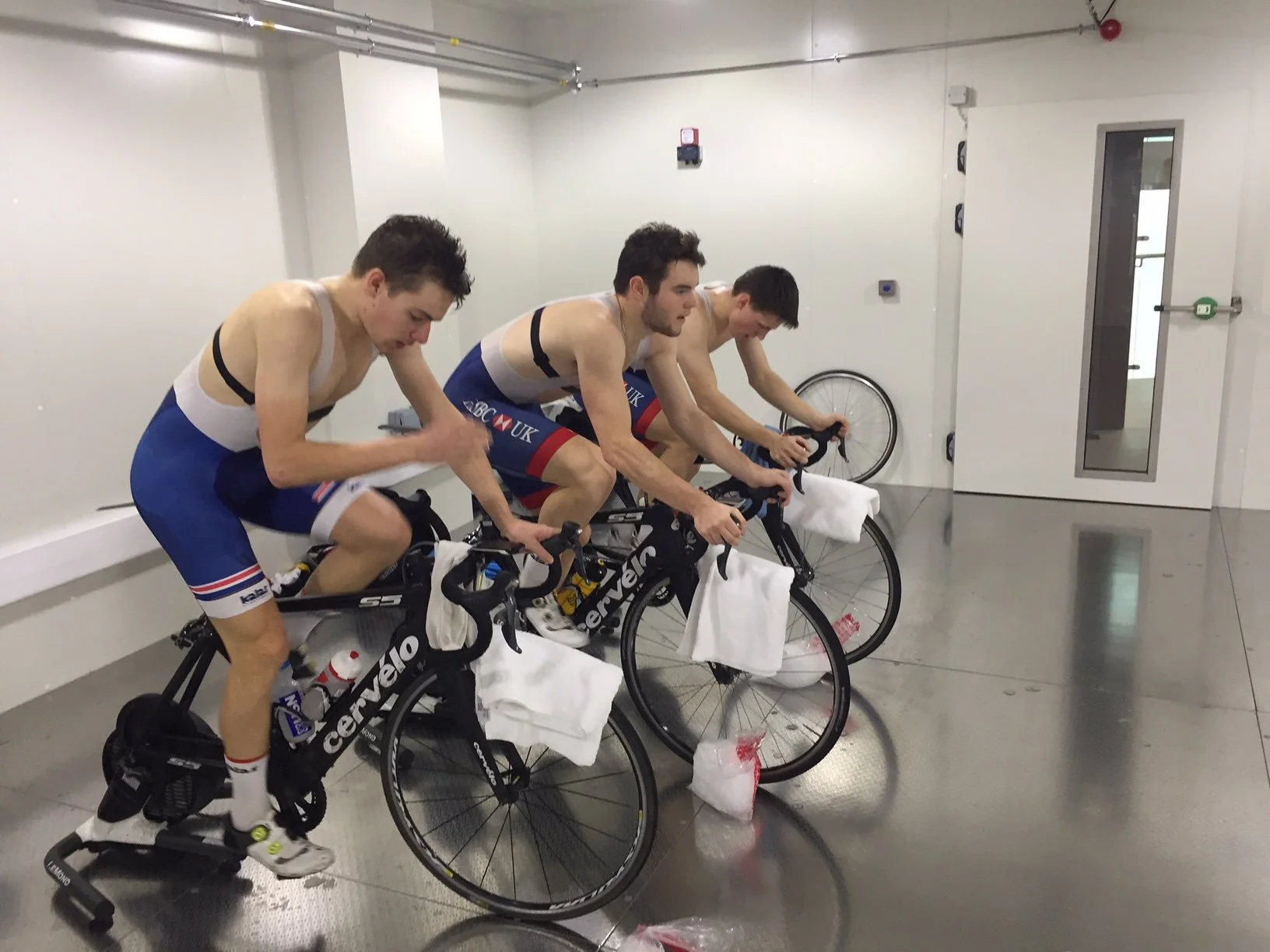
Years ago at British Cycling I ran a simple, brutal experiment. Take a group of elite under-23 riders (almost all of them became World Tour riders and/or Olympic medallists), put them in an environmental chamber and turn the room to 40°C and 100% humidity. No ramp, no gentle introduction. Drop them straight in and see what happens to their performance physiology.
Most people assume the first thing to go is the top end. The sprint. The raw power. It is the opposite. Maximal sprint power held up almost perfectly, if not improved. A rider could still produce a near-identical peak effort in the chamber as they could in a cool lab. What collapsed was everything underneath it: the aerobic system, the ability to recover between efforts, the capacity to go again. The engine that lets you repeat high outputs across a long event fell off a cliff while the headline number barely moved.
That dissociation is the single most useful thing I know about performing in heat, and it is exactly what could decide England against Norway in Miami.
Why the aerobic system is the one that fails
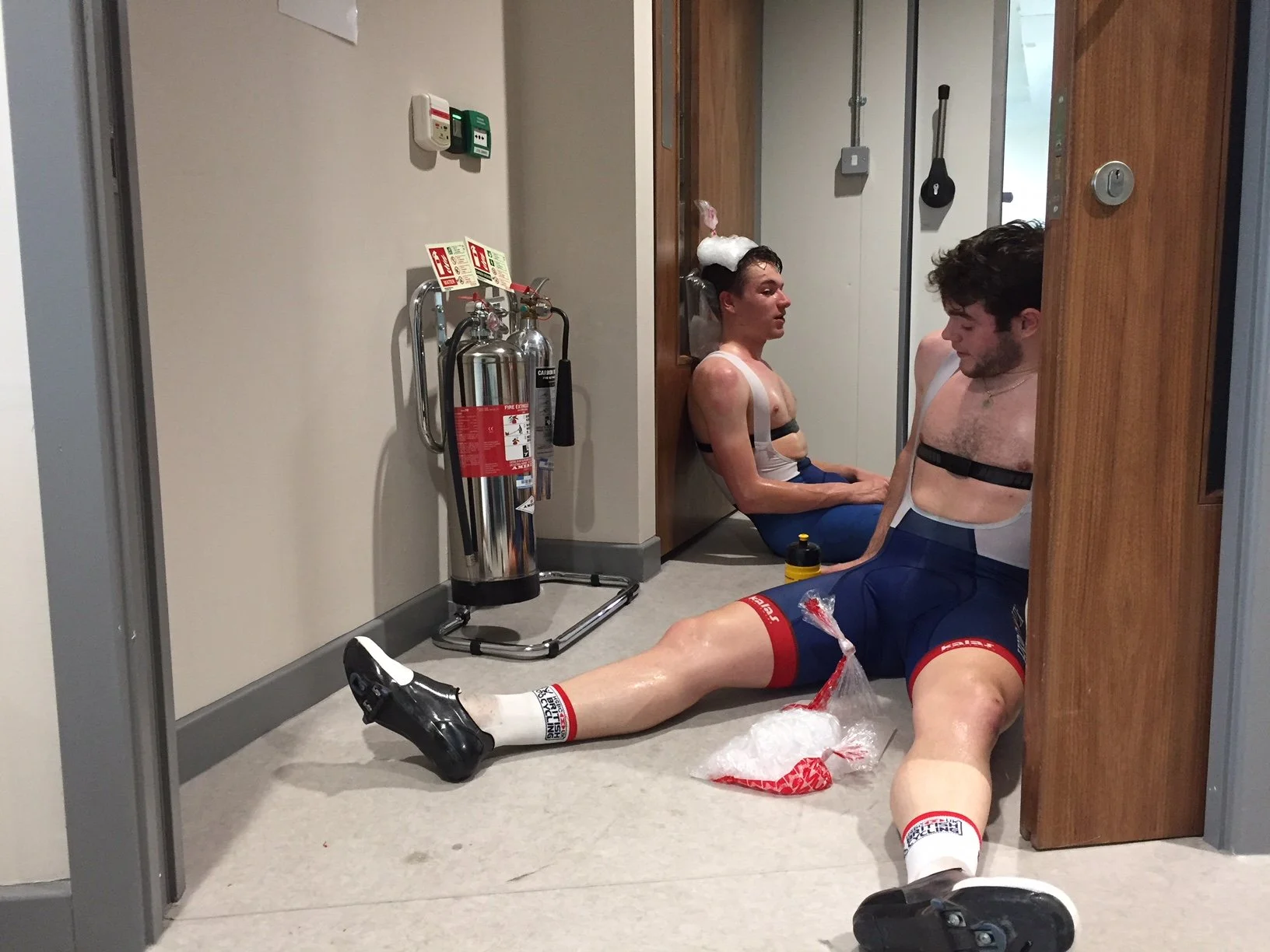
The body has one primary way of shedding the heat it generates: evaporating sweat off the skin. In dry conditions that works well. In 100% humidity it barely works at all, because the air is already saturated and has nowhere to put the water. The rider in my chamber was pouring with sweat that simply sat on the skin and did nothing. Heat production continued. Heat loss stopped. Core temperature climbed with nowhere to go.
A single maximal sprint is short enough that you can produce it before the system is overwhelmed. It draws on stored energy and finishes in seconds. Repeated aerobic work is different. It relies on a cardiovascular system that is now being asked to do two competing jobs at once: deliver blood to the working muscles, and push blood to the skin to lose heat. Those two demands fight each other. As core temperature rises, more blood is diverted to the surface, less is available to the muscle, and the aerobic ceiling drops. That is why the recovery between efforts is the first thing to break, not the effort itself.
This is not "heat," it is wet bulb globe temperature
A glance at the forecast air temperature does not tell you what a body is up against. The measure that matters is wet bulb globe temperature, which combines air temperature, humidity and solar radiation into one figure. Humidity is the part people underrate, and it is the part that ruins you.
Miami in July sits daytime highs around 32 to 34°C, with the heat index climbing into the low 40s once humidity is factored in. The 5pm kickoff pulls down the solar load compared with a midday game, which helps. It does nothing about the humidity. The specific combination that broke my riders in the chamber, high heat plus saturated air, is close to what both squads will meet on the pitch.
England have trained it. They have not played it.
Here is the trap. England camped in Miami and did visible heat work, training through the hottest part of the day. That is genuine and it matters. It is also not the same thing as playing in it.
None of England's five matches so far has been played in anything close to Miami's thermal load. Two were effectively climate-controlled: Dallas under a retractable roof, Atlanta under a roof with air conditioning while it was 34°C outside. Atlanta is the clean example. A 34-degree city, and the players never felt it. The other three were benign open air. The metabolic heat a player generates across ninety competitive minutes, chasing, pressing, sprinting to recover shape, is a categorically different stressor from a controlled training session in warm conditions. My chamber riders were fit, prepared athletes who knew exactly what was coming, and the aerobic system still fell apart the moment the real load arrived. Training the condition builds headroom. It does not tell you where the ceiling is until you play it under pressure.
Acclimatisation is not adaptation
Norway will have done the same preparation. This is the important asymmetry with the Azteca. Mexico lived at altitude and England could not buy that in a week, so it was a genuinely one-sided problem. Miami is symmetric. Neither side lives in tropical heat, so the edge shifts from where you reside to how you prepare, and that edge is available to both teams.
Whatever acclimatisation England have banked, Norway have likely banked too. Acclimatisation also expands the constraint rather than removing it. It widens the boundaries of what you can tolerate. It does not delete the boundary. Both sides will carry more thermal headroom than an unprepared team would, and both will still be working inside a compromised space where the aerobic system is the limiter. The match will not be won by whoever prepared. It will be won by whoever manages core temperature better once the game is live.
What you can actually do about it
This is where the cycling work stops being diagnostic and becomes practical, because we did not just measure the problem, we built the countermeasure.
As head coach of the Dutch track sprinters at the Paris Olympics I ran into a paradox that footballers share. You want the peripheral muscles warm to hit maximal power, up to six races in a day, but you want core body temperature as low as possible so the athlete recovers and does not overheat. The velodrome was brutal, up to 40°C on the track, no moving air, radiant heat pouring off the spotlights. We had anticipated it and built a protocol from research originally designed for military personnel and occupational workers such as firefighters and crop pickers.
The method is crude and it works. Immerse the hands and forearms in cool, not freezing, water, roughly 10°C. The palms and soles carry a high density of arteriovenous anastomoses, specialised vessels that act as the body's radiators. Cool water opens them, large volumes of blood pass through, shed heat, and return to lower core temperature quickly. We paired that with heated trousers to keep the sprinting muscles primed. Cool the core, keep the engine warm. It contributed to the Netherlands finishing top of the medal table for the first time in twenty years.
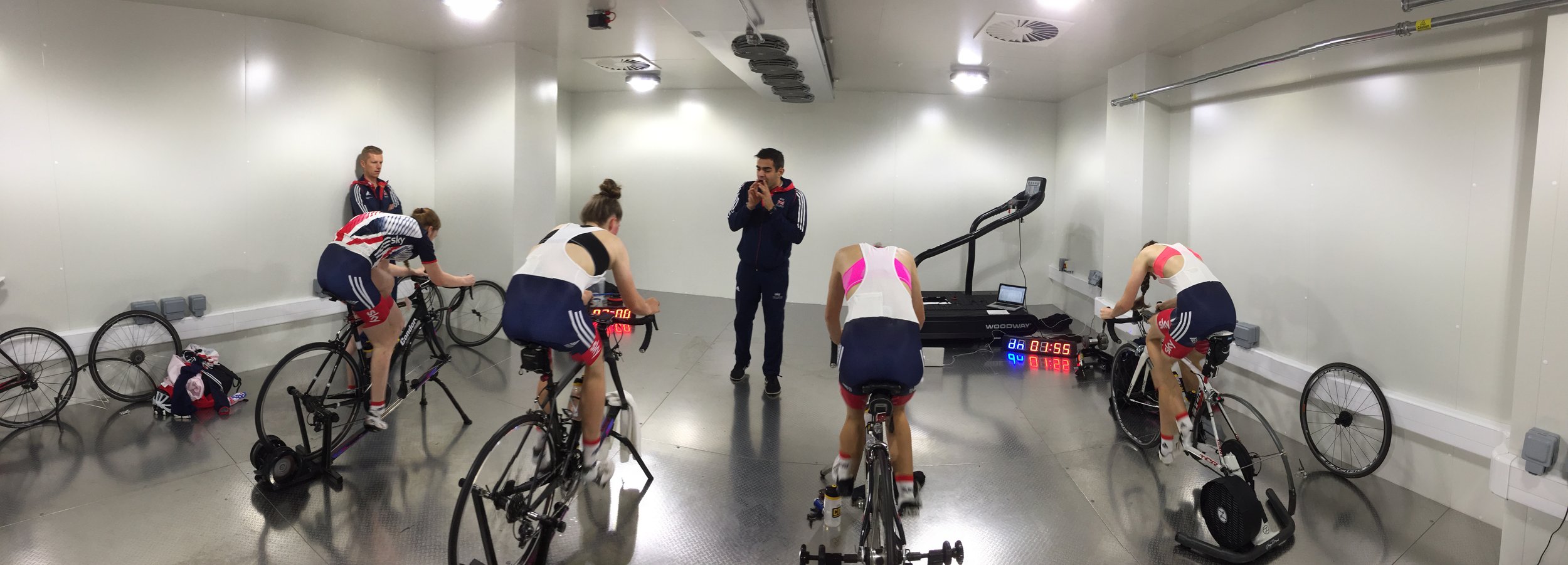
Note what we did not rely on. Ice vests are largely a perception of cooling. They drop skin temperature and feel good, but do little to core temperature, and the effect vanishes the moment the vest comes off. Ice on the torso can trigger skin vasoconstriction that traps heat in the core rather than letting it out. The evidence sits behind extremity cooling instead: USARIEM's arm-immersion work, and firefighter trials where adding a vest to arm immersion gave no extra benefit at all. We saw the same effect, exaggerated, in rider trials at 40°C and 100% humidity, the very conditions that concern us here.
The same limiter defined Dan Bigham's hour record. Core temperature was the ceiling on his performance. To buy thermal headroom he ate up to 1.5kg of ice slush before the effort, because melting ice absorbs a large amount of energy as it turns to water and pulls that energy from the body.
Translated to Saturday, two low-tech strategies do most of the work. A crushed-ice slushy as a pre-cool before kickoff and on the bench. Cold-water immersion for the hands and forearms during the hydration breaks. England's players could use those breaks to hold their output while a less disciplined opponent's core temperature climbs unchecked. The substitutes could cool continuously before they come on.
The point
It is the same lesson as the Azteca. Acknowledge the constraint and play to it rather than pretend it is not there. England have bought themselves headroom, not immunity, and so have Norway. My riders taught me that heat does not steal your best single effort. It steals your capacity to produce that effort again, and again, into the final twenty minutes. The side that manages core temperature at the margins, through pre-cooling, extremity cooling and honest pacing of the recovery windows, is the one that still has an aerobic system left when it matters most.
